

During University Press Week in November 2026, seven university presses announced the University Press Charter for scholarly publishing. The initiative responds to pressures around trust, quality, research funding, and rapid advances in artificial intelligence. The Association of University Presses reported that 138 publishers from 31 countries had signed by 11 November. Its commitments include prioritizing integrity over volume, making publishing costs more transparent, keeping human judgment central to AI use, expanding equitable access, and recognizing scholarly contributions such as peer review.
Why the University Press Charter matters now
Scholarly publishing is being asked to do more at a time when its operating environment is changing quickly. Researchers and publishers face rising submission volumes, new forms of research-integrity risk, growing interest in AI-assisted workflows, and pressure to explain the value and cost of publishing. The University Press Charter gives participating presses a shared way to state what they believe scholarly publishing must protect.
Table of Contents
The founding group includes Cambridge University Press and Bristol University Press, alongside Edinburgh, Liverpool, Manchester, Princeton, and University of London presses. The charter is framed as a common commitment across different disciplines, languages, regions, and publishing models, rather than a product specification or a single technology policy.
From principles to editorial practice
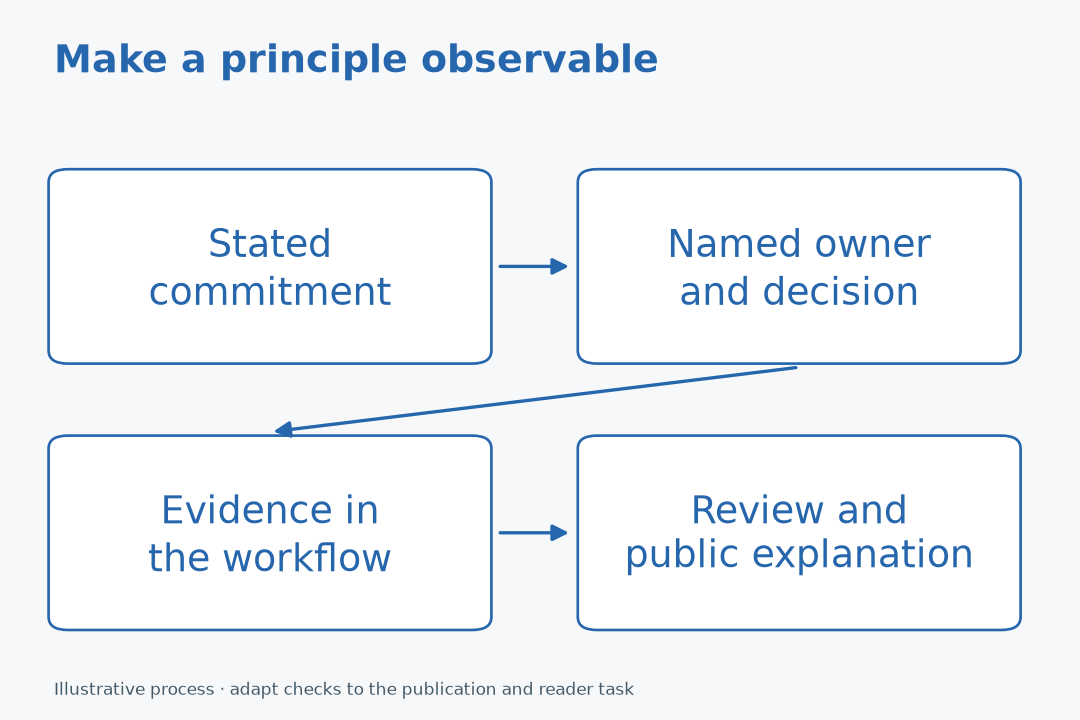
Putting quality and integrity above volume means that publishing systems should support careful review and clear accountability. Editorial workflows can use automated checks to identify missing information, unusual references, image concerns, or potential scope mismatches. Those signals can help staff prioritize work, but the journal still needs a named editor to assess context and make decisions.
Keeping human judgment at the center of AI use does not require rejecting automation. It means deciding which tasks can be assisted, what evidence a tool must provide, how a person reviews that evidence, and who remains responsible for the outcome. AI should not silently make acceptance or rejection decisions, invent explanations, or obscure how a manuscript was evaluated.
Transparency and fair recognition
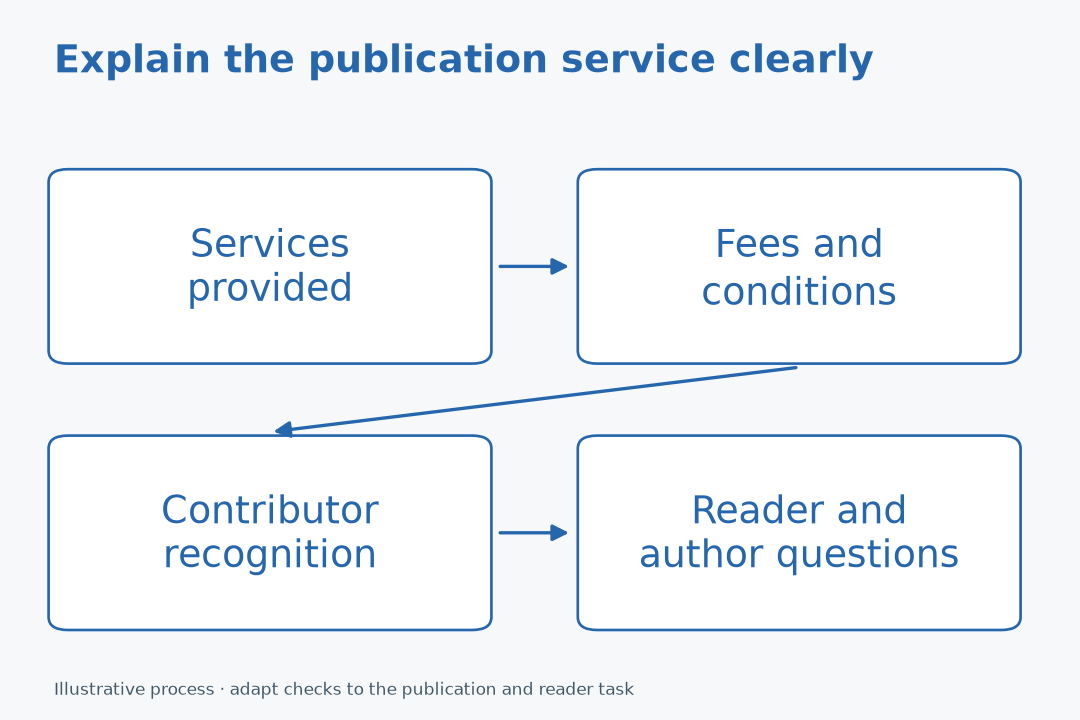
The charter also calls for greater transparency about the value and costs of publishing. Publishers can make this concrete by explaining service components, editorial policies, licensing, open-access charges, and how publication fees support production, preservation, distribution, and peer review. Clear reporting helps authors, libraries, and funders understand what they are paying for and what they receive.
Recognition matters because the publishing record depends on work that is often difficult to see. Peer review, editorial stewardship, data curation, copyediting, and production quality all contribute to the reliability of published research. Publishers can make these contributions more visible through contributor roles, reviewer acknowledgement policies where appropriate, and consistent records of editorial work.
Equitable access requires more than a free link
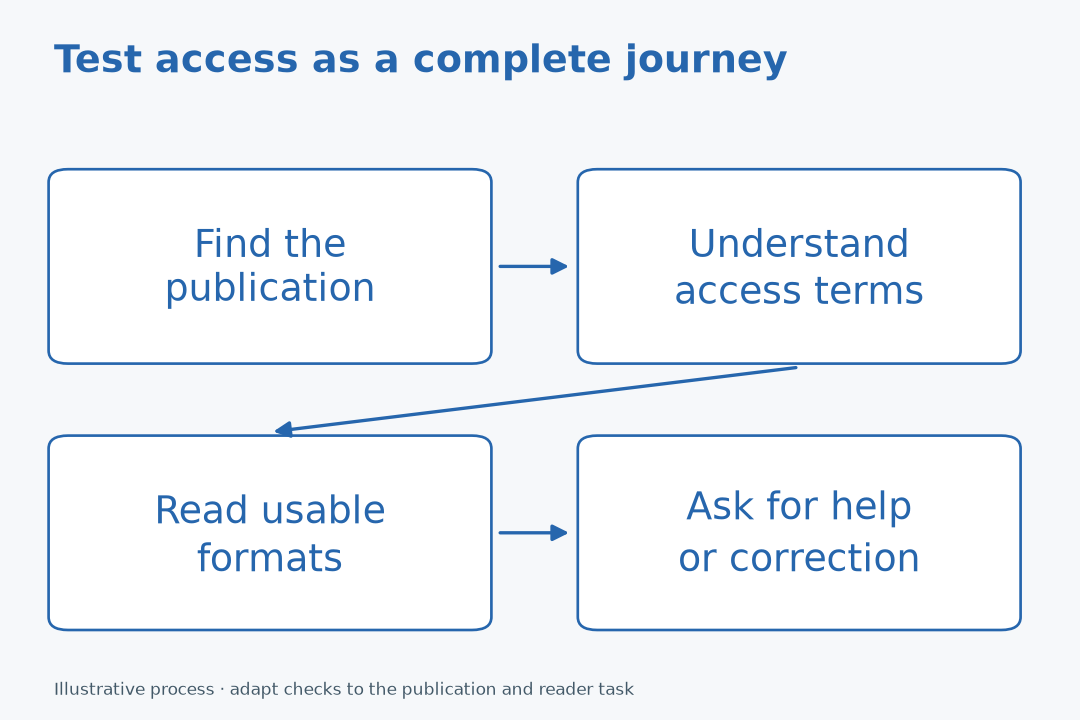
Expanding access to knowledge involves choices about licensing, formats, platforms, and discoverability. A work may be technically online but difficult to use if it is inaccessible to people with disabilities, poorly indexed, locked behind confusing access flows, or missing from the discovery services researchers rely on.
Publishers can make progress by investing in accessible HTML and eBooks, clear open-access policies, stable identifiers, useful metadata, and preservation arrangements. They can also review how authors from different regions and disciplines encounter submission systems, fees, and editorial policies. Access is a service design question as much as a licensing question.
A practical way for publishers to apply the charter
A press can translate the commitments into a small set of operational checks. For each AI-enabled workflow, document the purpose, data used, limitations, human decision point, and escalation path. For editorial quality, track whether checks improve the discovery of real issues without generating excessive false alarms. For transparency, publish plain-language descriptions of policies, fees, and the role of automation.
It is also useful to review the complete content lifecycle: submission, peer review, production, publication, correction, preservation, and post-publication updates. At each stage, ask who owns the decision, what evidence is retained, and how a reader or author can raise a concern. These practices make principles observable in daily work.
The charter can encourage collaboration between presses that face similar challenges. Shared guidance, interoperable standards, and reusable accessibility or integrity practices can help smaller organizations build strong processes without starting from scratch.
University Press Charter: 5 practical publishing checks
The University Press Charter states shared commitments; a press still needs to decide how to demonstrate them in its own setting. The five checks below are suggested operational questions, not an official certification scheme or a claim that signatories already follow this particular process. A useful review begins with a small sample of actual work and identifies the evidence behind each decision. It should include the people who use the process, not only the team that designed it.
First, can a staff member explain the quality decision? Select a completed publication and follow its path through review, revision and approval. Identify who was responsible at each point and what evidence they considered. Where an automated tool produced a flag, check whether a person assessed its relevance. Applying the University Press Charter in this way would make quality and integrity visible in a record of decisions, without confusing the number of checks with the quality of the review.
Second, are the limits of AI assistance clear? Choose one actual use, such as a proposed summary or a preliminary reference check. Record the approved purpose, material supplied, known limitations and required review. Check whether an editor can identify and challenge an incorrect result. A press considering the University Press Charter should be able to explain where human responsibility sits, including who can pause the process when the tool’s output is uncertain or unsuitable.
Third, can an author understand the service and its conditions? Read the relevant policy and fee information as someone encountering the press for the first time. Check whether the language explains what is provided, when any charge applies and where a question can be raised. Avoid assuming that an internal accounting category will make sense to an author. Clear explanations can support the University Press Charter’s transparency commitment while acknowledging that different publishing models have different arrangements.
Fourth, can a reader complete an ordinary task? Search for a publication, open its landing page, understand the access terms and read an available format. Review the journey with appropriate accessibility checks and user feedback. A free link alone does not demonstrate that the content is easy to find or use. A University Press Charter review can document the barrier, the affected task and the person responsible for fixing it, rather than relying on a broad claim of accessibility.
Fifth, is scholarly work recognized in a way participants understand? Examine how contributors and reviewers are told about acknowledgement, confidentiality and any optional credit process. Check that the public record reflects the applicable policy and the person’s choices. Recognition should not depend on disclosing confidential review information. Keep a record of what was offered and agreed, and provide a route to correct a mistake in the acknowledgement or contribution information.
Imagine a small press testing an AI-assisted reference-checking step. The tool reports a missing identifier, but the editor finds that the source is a legitimate publication without that identifier. The team records the reason for dismissing the flag and updates the instructions so it does not become an automatic rejection rule. This is an illustrative example, not a reported case from a charter signatory. It shows how a broad commitment can become a concrete decision that another colleague can review.
The resulting action list should be manageable: a clearer policy sentence, a named reviewer for a tool output, a corrected metadata field or a tested support route. Assign an owner and revisit the issue after the change. The University Press Charter is most useful as a prompt for continuing work when a press can show what improved, what remains uncertain and how it will listen to the people affected by its publishing decisions.
One way to make progress reviewable is to keep a short evidence note for each change. The note can state the problem, the decision, the person responsible and the example used to check the result. This is a suggested management practice, not an additional requirement imposed by the University Press Charter. It helps a press explain how an intention became a change in everyday work without implying that a completed checklist establishes the quality of every publication.
For example, imagine that authors repeatedly ask whether an automated manuscript check is an editorial decision. The press revises its guidance to distinguish a tool-generated flag from an editor’s assessment. It names the route for raising a question and asks several staff members to explain the revised process in their own words. The useful evidence is the clarified guidance and a documented review of how it is understood, rather than simply the date on which a new policy file was uploaded.
Choose review examples that include an awkward case as well as a straightforward one. A publication with missing information, a contributor who needs assistance or an inaccessible supplementary file can expose a gap that an uncomplicated example does not reveal. Record what was tested and the limitation that remains. A small review should not be described as proof that an entire list of titles or every author journey has been evaluated. Making that boundary explicit supports a more credible account of progress.
Keep internal evidence separate from material suitable for a public update. Editorial records may include confidential correspondence, reviewer identities or unpublished research. A public explanation can describe the change and its purpose without exposing those records. For a press working with suppliers, identify which team holds the evidence and who can answer a reasonable follow-up question. A statement that a supplier follows a policy is less informative than a clear account of the responsibility the press has assigned and checked.
Invite feedback from people who experience the process at different points. An author may understand a fee explanation but struggle to find it before submission. A reader may reach the article page but be unable to use an important figure. A reviewer may receive an acknowledgement that does not match the agreed confidentiality arrangement. These are different problems and should not be reduced to one general satisfaction measure. Record the affected task, the practical consequence and the team that can resolve it.
Finally, review whether the improvement remains in place after a change of staff, supplier or platform. A useful instruction can become outdated when a workflow changes. Assign a review point and preserve the rationale so the next colleague understands what the policy was meant to achieve. An honest update can explain both completed changes and continuing work. That approach treats the charter as a shared direction for sustained publishing practice while avoiding claims that a signature or a single review has settled every question of trust, quality and access.
The takeaway
The University Press Charter offers a timely statement of values for a sector navigating AI, financial pressure, and public questions about trust. Its impact will depend on whether signatories turn broad commitments into visible policies and repeatable practices.
For technology providers, the charter is a useful design signal. Systems should make human decisions accountable, preserve the scholarly record, support transparent operations, and widen access to research. Good publishing technology should strengthen the conditions that make scholarship trustworthy.
Sources and further reading
- Association of University Presses, AUPresses Welcomes Announcement of University Press Charter, 11 November 2026
- University of London, University Press Charter news, updated 12 November 2026
Read our editorial standards for the principles behind our coverage.